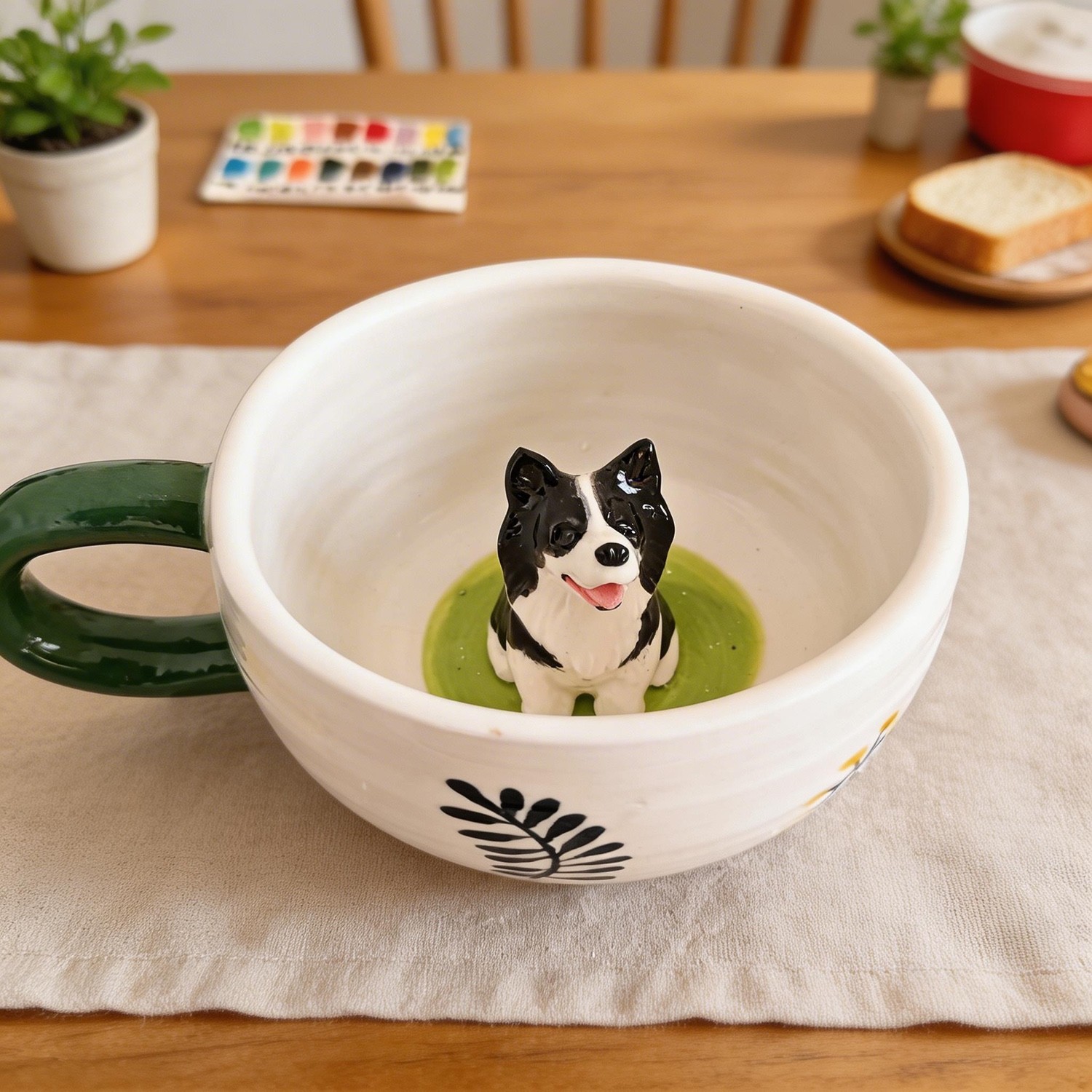
A custom ceramic pet mug looks simple when it is finished, but the process has several decisions behind it. The artist is not just making a cup. They are translating a pet photo into a tiny sculpted face, then fitting that portrait into an object that still needs to feel balanced and usable.
This article explains the usual handmade workflow, from photo selection to final quality checks.
Step 1: Choose the reference photo
The clearest pet mugs usually start with one main face photo and one optional side or full-body photo. The maker needs to see the face shape, ear position, eye color, markings, and any small features that make the pet recognizable.
If you are unsure which image to use, start with our custom pet photo upload guide. A bright, front-facing photo is usually better than a cute but blurry screenshot.
Step 2: Decide the mug style
Different mug styles create different emotional effects. A pet inside mug feels like a small surprise when you look into the cup. A 3D pet climbing mug is more playful because the pet appears to be holding onto the side. A 3D pet head mug keeps the portrait visible from the outside.
Step 3: Shape the clay body
For wheel-thrown or hand-built ceramic pieces, the base form comes first. The maker has to keep the mug comfortable to hold while leaving enough room for the pet sculpture, painted details, and glazing. This is why handmade mugs often look slightly softer and less machine-perfect than factory cups.
Step 4: Sculpt the pet details
The small pet figure is built in parts. Ears, muzzle, paws, tail, and body shape are added gradually. The goal is not a museum-level anatomical copy; it is a recognizable keepsake that captures the pet’s expression. For many customers, the ears and eyes matter more than perfect symmetry.
Step 5: Paint markings slowly
After the shape is ready, the artist paints markings, fur patches, eyes, and expression details. This is where the second reference photo can help. A black spot over one eye, a white chest, or a tiny orange eyebrow can make the finished piece feel personal.
Step 6: Glaze and fire safely
Food-contact ceramic pieces need more care than decorative-only keepsakes. In the United States, the FDA discusses lead exposure from foodwares and ceramicware in its guidance on lead in food and foodwares. For customers, the practical takeaway is simple: use handmade mugs as intended, avoid damaged glaze surfaces, and follow the care instructions provided with the product.
Step 7: Check the finished piece
Before shipping, the maker should check whether the pet is secure, whether the glaze surface looks even, and whether the mug matches the selected style. Small handmade variations are normal. Cracks, sharp edges, loose parts, or missing personalization are not.
What makes a handmade pet mug worth ordering?
A handmade mug is not the right gift for everyone. If someone wants a perfectly identical, factory-made object, a printed mug may be safer. If they want a small portrait that feels warm, imperfect, and personal, a handmade ceramic mug is a better fit.
To compare styles, read our custom pet mug gift guide, or browse our Stilted Ceramics workshop.